


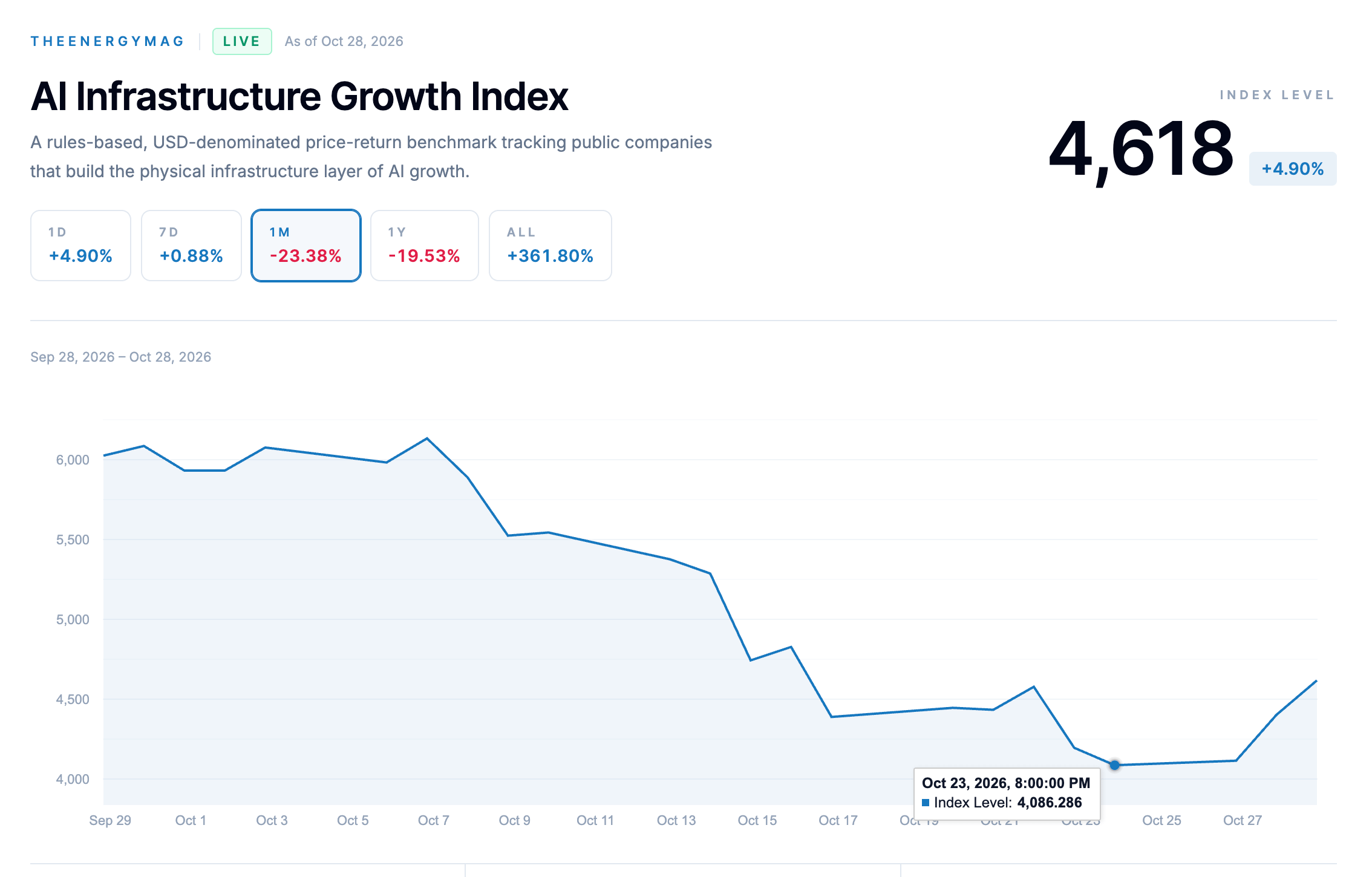
If the rebound in AI infrastructure stocks holds, Monday’s Anthropic S-1 may be remembered as the moment sentiment turned. The filing landed on October 26, just as the group began recovering from the recent selloff. TheEnergyMag’s AI Infrastructure Growth Index showed a local low of 4,086 last week, before bouncing back by 13% to 4,618 as of Wednesday.
There is a case for it. Anthropic disclosed approximately $265.6 billion of future fixed or minimum guaranteed purchase commitments as of June 30. Those obligations stretch over years and across providers, but their scale offers support for the demand assumptions behind the infrastructure buildout.
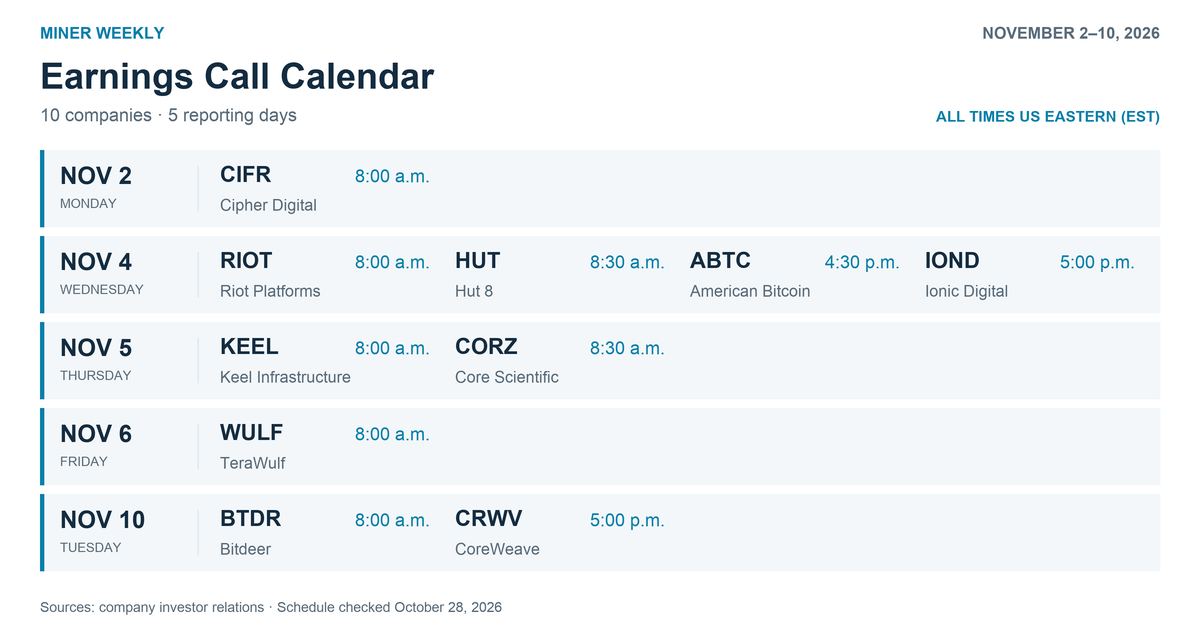
The next test comes from the companies supplying that capacity. Even with a willing customer, construction overruns, delayed handovers and financing costs can erode returns. Earnings calls running from Cipher on November 2 through CoreWeave on November 10 are expected to reveal how much contracted demand is becoming billable capacity, recurring revenue and cash.
Galaxy offers an early indication
Galaxy’s data center adjusted EBITDA rose to $69 million in Q3 from $11 million in Q2, while delivered critical IT capacity remained at 133 MW. Helios Phase I had been handed over to CoreWeave by the end of June, making Q3 the first full quarter of revenue-generating operations. Meanwhile, quarterly data center capex increased to $757 million from $448 million as expansion continued.
That captures two forces shaping this earnings season: completed capacity is starting to contribute, while the next phase still needs substantial capital. Timing matters. A hall delivered late in a quarter may barely affect revenue until the following period.
Which capacity is earning—and getting paid?
Core Scientific ended June with 395 MW of billable capacity and reached 485 MW earlier this month. Its results should show how much further billing capacity increased and how those deliveries translated into colocation revenue. TeraWulf’s revenue-generating critical IT capacity rose from 81 MW at June-end to 102 MW in July. That should support its HPC revenue contribution, alongside progress toward further deliveries previously expected in the second half.
Revenue composition is worth watching too. Riot’s $23.2 million of Q2 data center revenue included $18.3 million of tenant fit-out services and $4.9 million of operating leases. With the initial 25 MW for AMD delivered, Q3 should provide a clearer view of recurring rent. Another 10 MW was targeted for November.
For Ionic Digital, collections deserve attention. Q2 infrastructure leasing revenue reached $43.8 million, while cash payments for the operating 234 MW at Ward County began in August. The effect on receivables and operating cash flow should become clearer. Its additional 466 MW received provisional ERCOT Base Load classification in September, with energization targeted for end-2027.
What remains to be built and financed?
Cipher’s October presentation outlined additional completion costs at Barber Lake and an amended rent commencement schedule spanning Q4 and Q1 2027 for several halls. Black Pearl began generating rent in August. The call should clarify the billing ramp, remaining handovers and cash required to finish construction.
Hut 8’s initial deliveries at River Bend and Beacon Point were targeted for Q2 and Q3 2027, respectively. Construction progress and remaining funding needs will therefore say more about those developments than Q3 revenue. Keel remains earlier in the process: its August update described tenant negotiations at three sites. Any signed lease would need to be assessed alongside its construction budget, delivery obligations and financing.
CoreWeave illustrates the financing burden at scale. Q2 revenue reached $2.575 billion and adjusted EBITDA was $1.510 billion, alongside $640 million of net interest expense and a $626 million net loss. Converting backlog into revenue must be weighed against the spending and borrowing needed to deliver it. Across the sector, capitalized interest, principal repayments and restricted cash also deserve scrutiny.
Bitdeer’s Q2 AI Cloud revenue reached $14 million, but the segment recorded a $2.3 million gross loss. Improving margins and progress toward Tydal’s initial Q4 colocation delivery would strengthen its AI expansion case. American Bitcoin requires a different lens: mining costs, fleet efficiency, capital spending and Bitcoin per diluted share, including how accumulation is financed.
Anthropic’s filing may have restored some confidence in demand. Results showing capacity entering billing, rent becoming cash and construction staying within funded budgets would give that confidence firmer support. If Monday marked the bottom, earnings season is where the case for a lasting recovery starts to take shape.
P.S. Recall our last issue on bitcoin’s hashrate regaining the 1 ZH/s level? Turns out bitcoin’s mining difficulty is set for another 6% jump in a few hours. Who’s staying plugged in—and why? Join our October 29 X Space to hear from the miners sticking with Bitcoin as their peers turn to AI.


Regulation News
‘Pure arrogance’: anger in Finland as Google illegally fells 250,000 trees for datacentre
Trump to roll back methane rules in latest Texas campaign push
Hardware and Infrastructure News
HIVE Secures $129 Million Loan at 9% for Cohere AI Project
IREN Closes $363 Million AI Equipment Refinancing With Wingspire
Corporate News
Nvidia to Invest $3 Billion in Meta as Companies Expand AI Partnership
Luxor Raises $16 Million From CMT-Led Group to Expand AI Business
Constellation Secures Conditional $5 Billion DOE Loan Commitment to Expand Nuclear Output
Financial News
Bloom Energy Reports Q3 2026 Revenue of $1.24 Billion
TeraWulf Expands Revolving Credit Line 60% to About $400 Million
Soluna Repays $28.7 Million Credit Facility to Generate Capital
Anthropic Files for IPO as Quarterly Sales Hit $11.6 Billion
AI Infrastructure Stocks Rebound as Anthropic Reveals Operating Profit
Galaxy’s Data Center Earnings Jump as Helios Leasing Revenue Ramps Up
Feature
OP-ED: Private Miners Have an Evidence Problem
ENGIE’s North America Chief Says AI Boom Needn’t Raise Power Bills
TEM Explainer Series: A New Data Center Doesn’t Just Draw Power. It Can Redraw the Grid